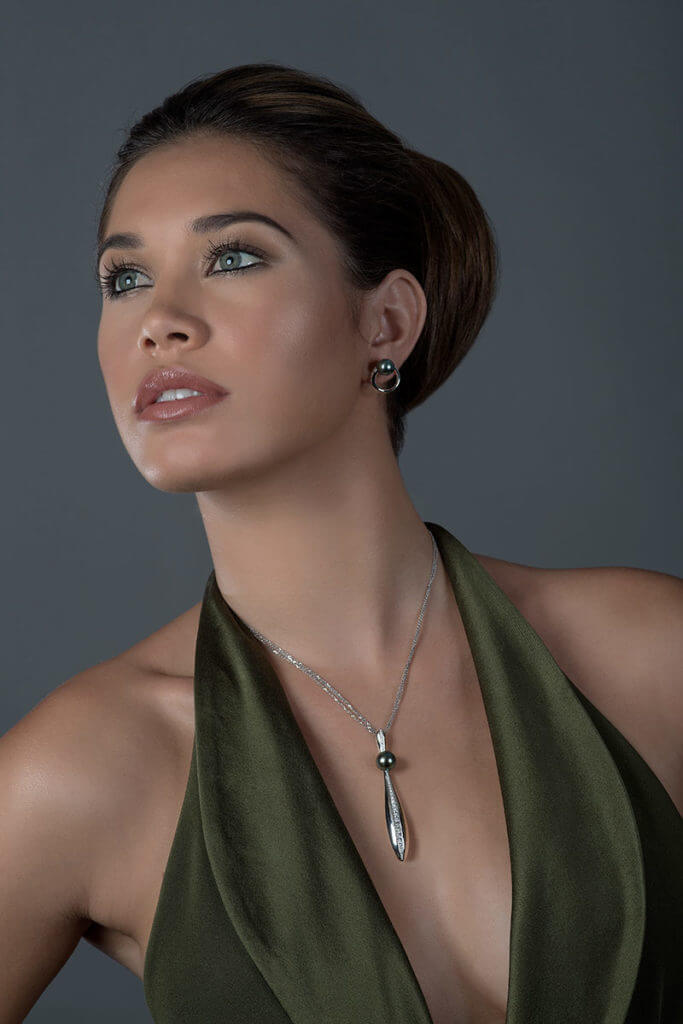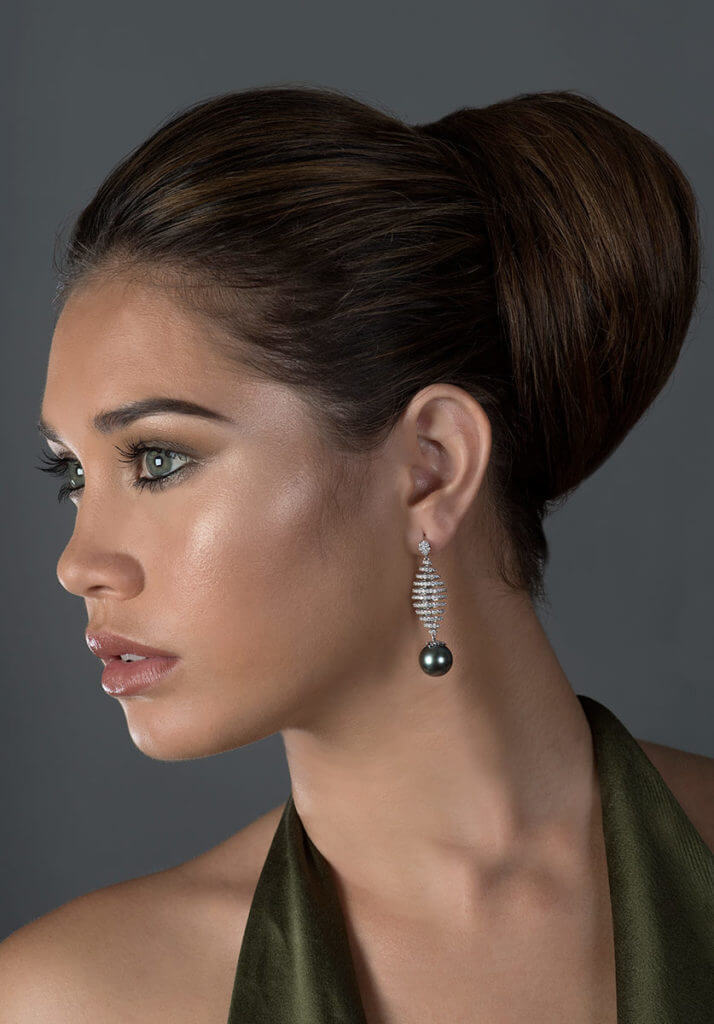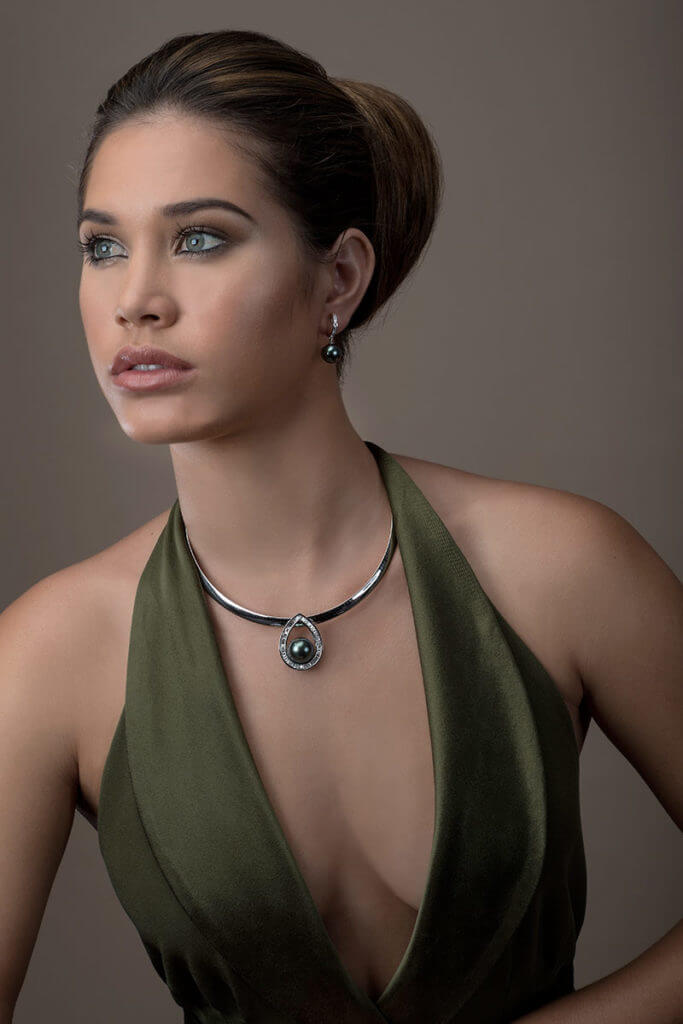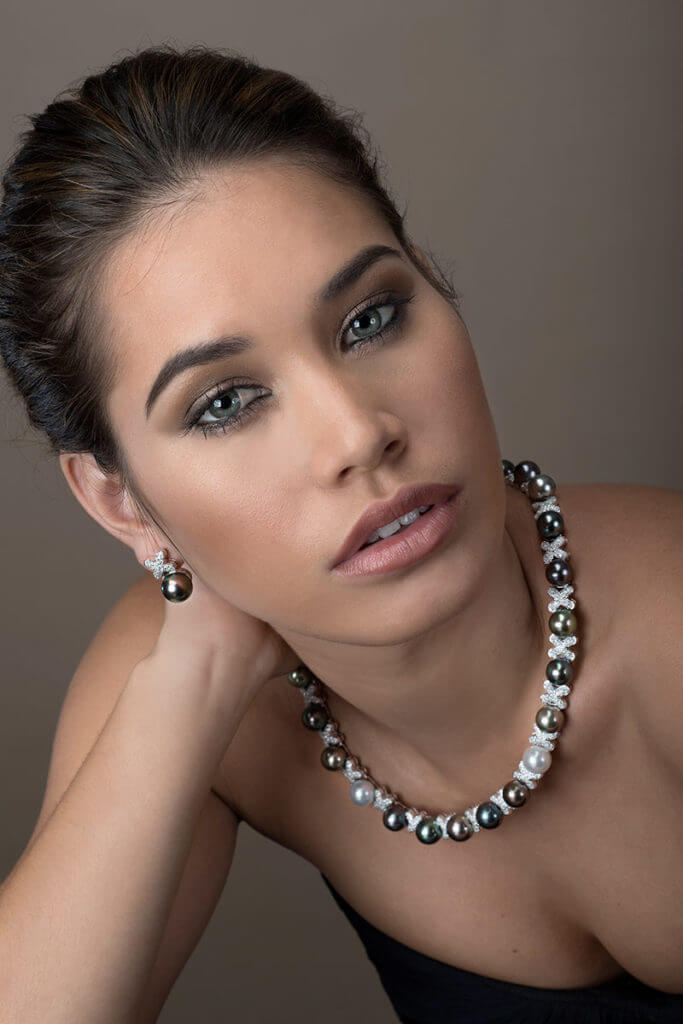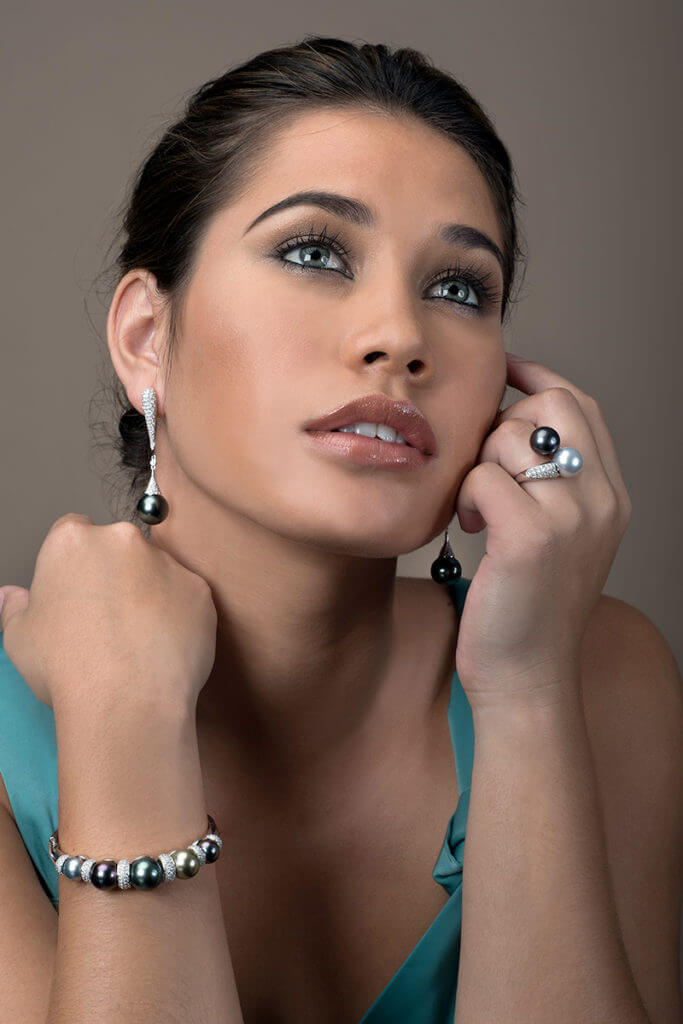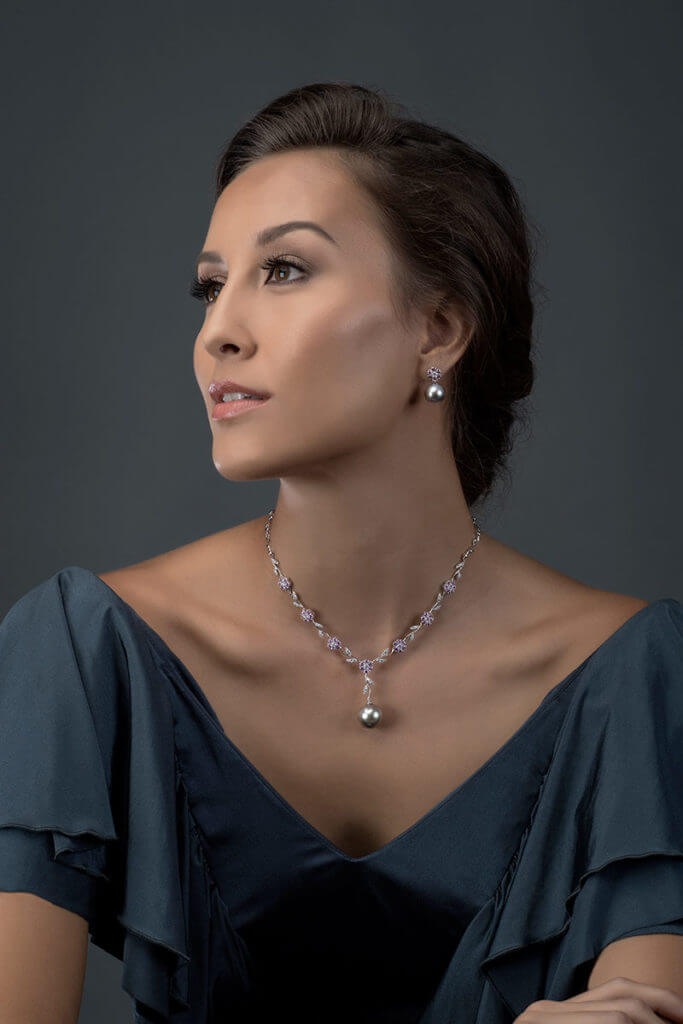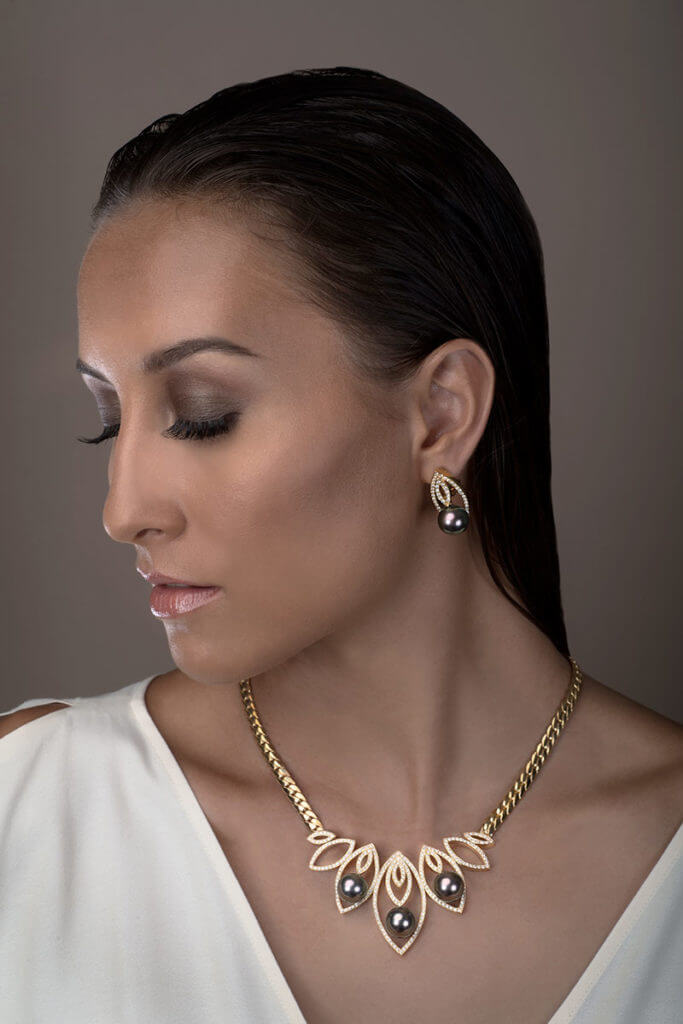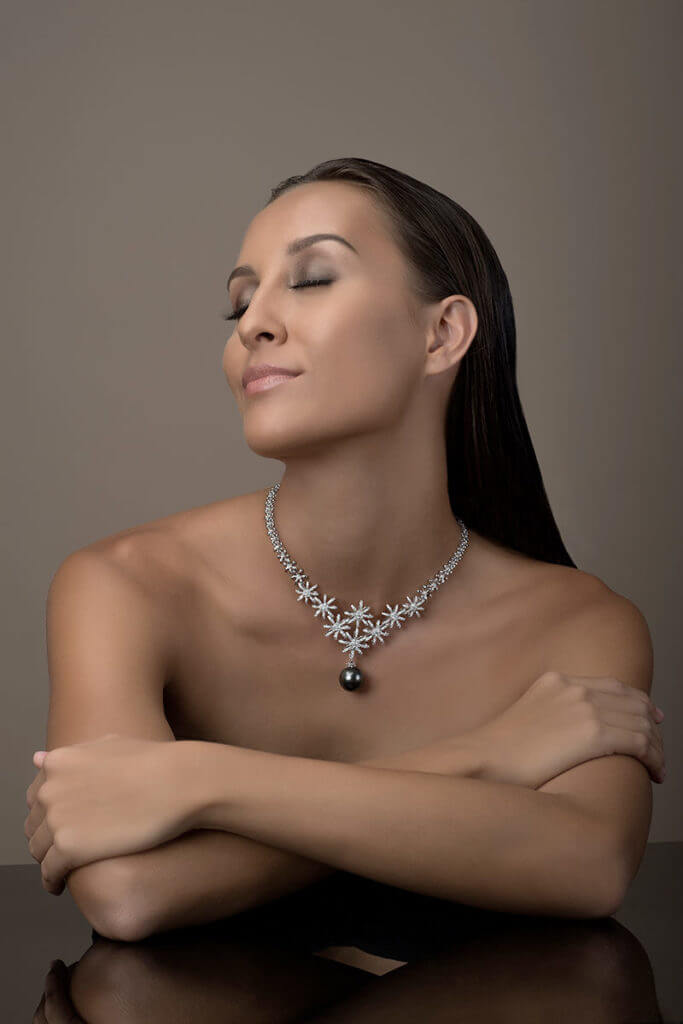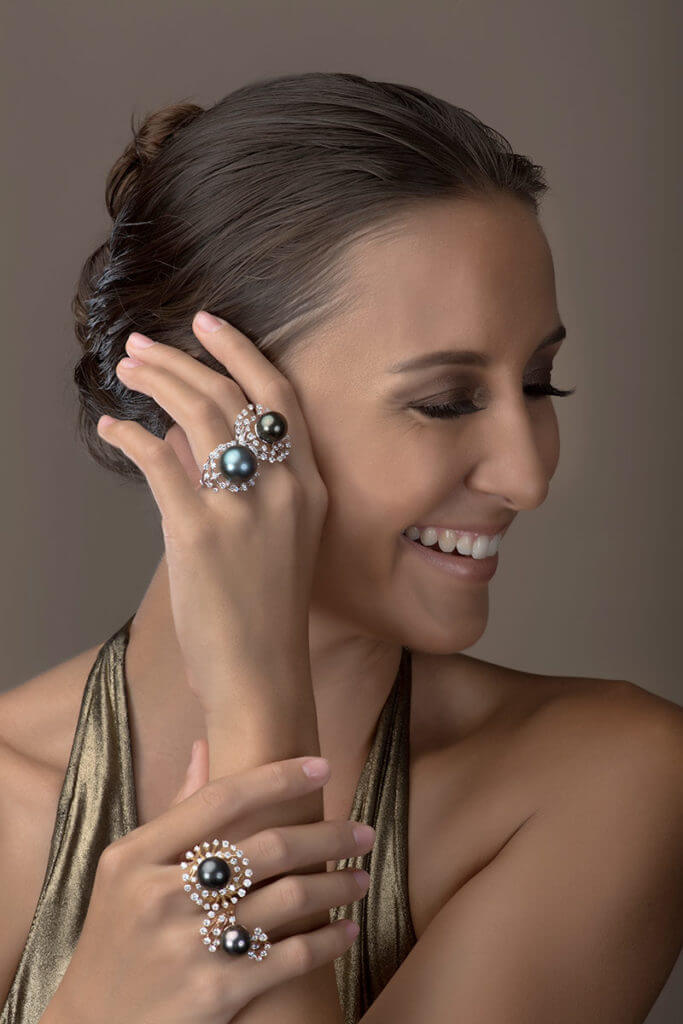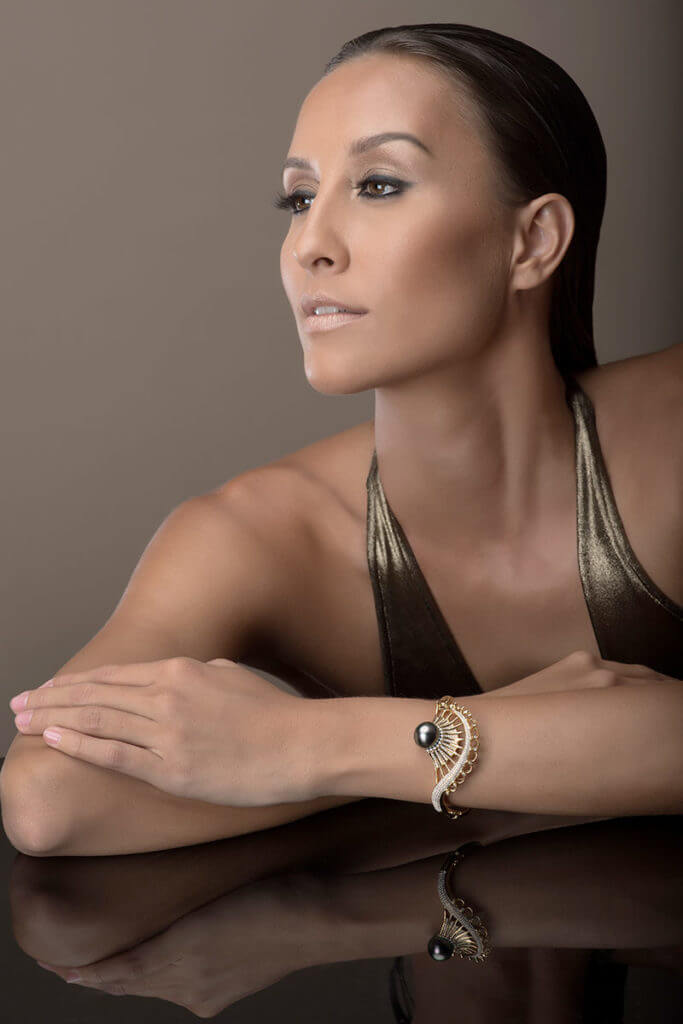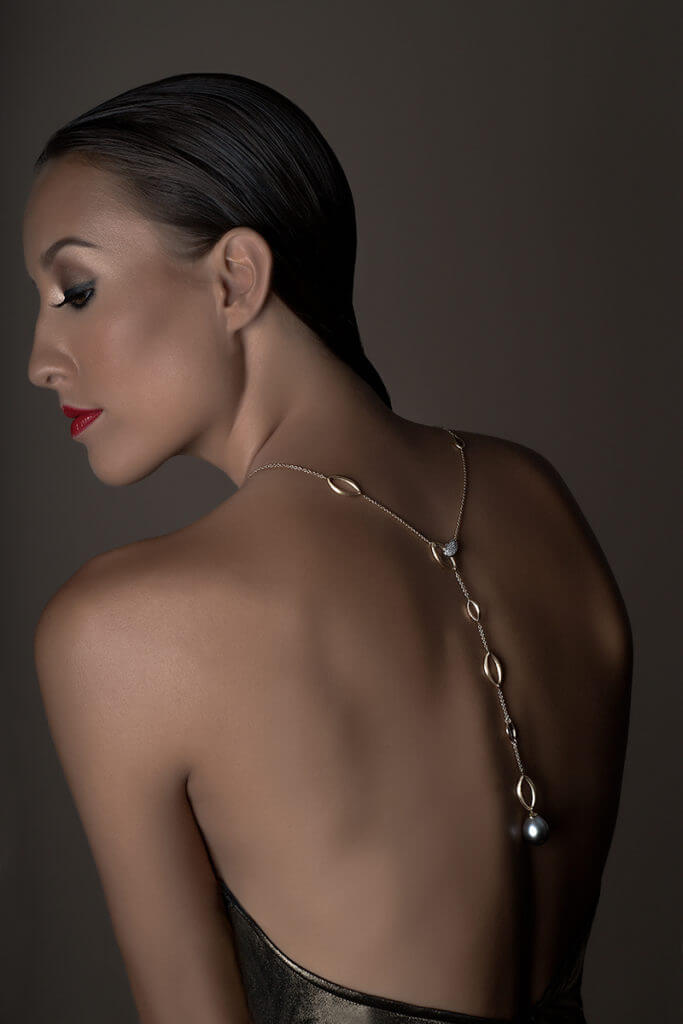

A Tahitian pearl is almost never solid black. It has a dark body tone with a translucent sheen over it, and that sheen can read as green, blue, purple, silver or rose depending on the light. So Tahitian pearl color meaning is less about a fixed name than about what a shade evokes and how rare it is. Peacock suggests the depth of the lagoon and is the most prized of all. Green recalls the shallows. Blue and aubergine are rarer still. Silver and dove are the most wearable. The range of Tahitian pearl colours runs from peacock to dove grey, and this guide takes each shade in turn: what it looks like in person, what it evokes, how rare it is, how it tends to affect price, and who it suits.
How a Tahitian pearl gets its color
The color is not added. It forms inside the nacre that the black-lipped oyster, Pinctada margaritifera, lays down layer by layer around the nucleus over months of growth in the lagoons of French Polynesia. The dark, green-and-silver lining of the oyster’s own shell passes into every layer of the pearl. That is why no two Tahitian pearls match exactly, and why a genuine one holds its color all the way to the drill hole instead of pooling it near the surface like a dyed pearl. We cover the biology and the origin story in where do black pearls come from, and our Fakarava pearl farm page shows the water these colors are grown in. For a wider overview of the Tahitian pearl, including shape, size and surface, see The Tahitian Pearl.
Body color and overtone: the two layers that matter
Every description below depends on two ideas:
- Body color is the base tone you see in flat light: charcoal, grey, aubergine, bronze.
- Overtone is the translucent film of color that floats over the body and shifts as the pearl moves: the green, pink or blue flash, sometimes called orient. A strong, even overtone is what separates an ordinary pearl from a memorable one, and it counts for more in value than the body color itself. For how overtone sits alongside luster, shape and surface grade in an actual buying decision, see our Tahitian pearl buying guide.
What each Tahitian pearl color evokes
Part of the appeal of a Tahitian pearl is that its colors are the colors of the place it comes from. Peacock carries the depth of the lagoon, the green-over-purple that plays on deep water at dusk. Green is the light in the shallows over pale sand, and the density of island foliage after rain. Blue is the open ocean and a clear night sky. Aubergine holds the warmth of a sunset and the tone of volcanic earth. Cherry and bronze are coral and driftwood. Grey and silver are the inside of the shell itself, and moonlight on still water. None of this is a code to decipher; it is simply why one pearl feels oceanic and another feels earthy. Choosing a color is choosing which part of that landscape you want to carry.
Peacock: the signature Tahitian pearl color
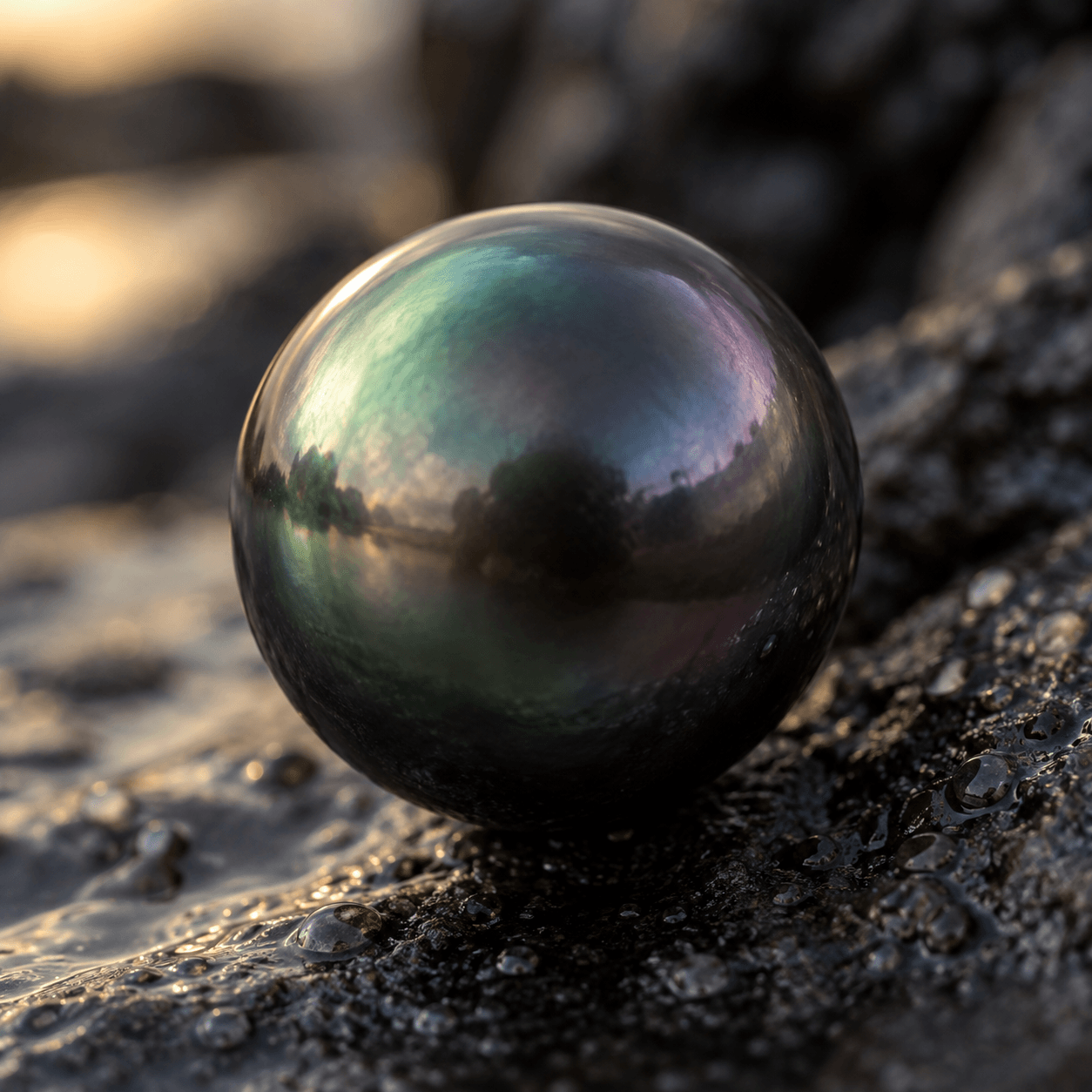
Peacock is the shade the Tahitian pearl is famous for, and the one people mean when they ask what a peacock pearl “means”. The body is dark, and over it runs a blend of forest green and aubergine purple that moves as the light moves, the way an oil sheen shifts on water or a peacock feather turns as the bird walks. That movement is the whole point. A flat green pearl is not a peacock pearl.
Peacock is also the benchmark for value. A pearl with a genuinely dark body, a clean peacock overtone with no muddiness, and high luster commands a clear premium, and it is what most collectors are chasing. Softer, lighter peacock tones are more attainable and still unmistakably Tahitian. It suits almost everyone, which is part of why it is so sought after: it behaves like a neutral that happens to hold color.
Green and pistachio Tahitian pearls
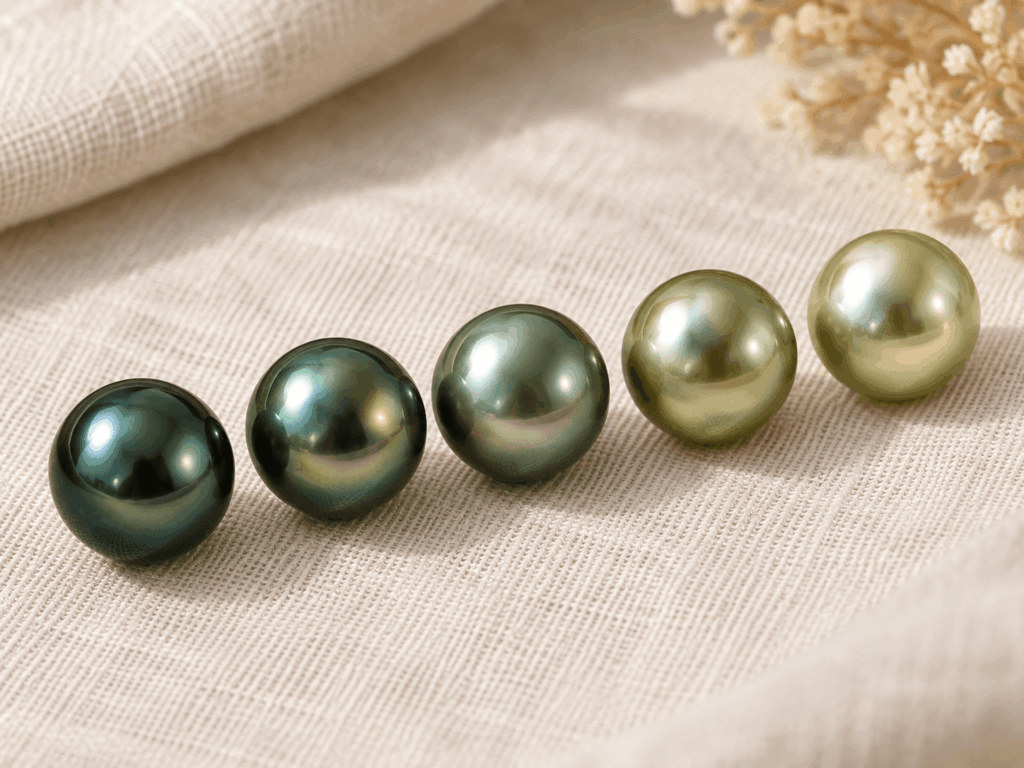
Not every green Tahitian pearl is a peacock. Many are simply green: a green overtone over a grey or bronze body, without the purple counter-flash. In a peacock vs green comparison, green is the quieter, more everyday shade, and because green is one of the more common overtones the oyster produces, these pearls usually sit closer to the middle of the range. Good value for a color with real character, and flattering on warm skin especially.
Pistachio is the pale, warm, slightly yellow-green end of this family. It looks soft and modern, less dramatic than peacock, and a clean, even pistachio is noticeably harder to find than a standard mid green, so it can cost more than its gentle appearance suggests.
One warning for buyers: dyed freshwater pearls are very often sold as “green pearls”. A natural green Tahitian pearl holds its color evenly to the drill hole and shifts subtly as it turns. A dyed one usually shows a darker ring at the drill hole and sits flat.

Blue and lagoon Tahitian pearls
Blue is one of the rarer and more coveted Tahitian shades. A true blue pearl has a blue-grey body with a soft blue overtone, sometimes with a silver or rose flash on top. The tone people picture when they hear “lagoon” is a lighter, brighter blue-green that genuinely does recall shallow water over sand.
Value splits along saturation. A pure, saturated ocean-blue pearl is genuinely rare and priced to match. The far more common grey-blue and steel-blue pearls are more accessible and still beautiful, with a cool, modern look, and they pair exceptionally well with white gold and diamonds.
Suits: cool skin tones, and anyone drawn to a quieter, more contemporary pearl.

Aubergine and eggplant Tahitian pearls
Aubergine, also called eggplant, is a deep brown-purple body color, like the skin of the vegetable it is named after. It is one of the warmest and most distinctive colors in the Tahitian range. On many aubergine pearls a green or rose overtone lifts the surface, which is where the “aubergine peacock” description comes from. A deep, even aubergine with strong luster is uncommon and sits in the upper part of the range; lighter mauve and dusky-rose versions are easier to find and priced more gently.
Aubergine flatters warm and olive skin tones and autumn palettes, and it comes alive in rose gold better than almost any other pearl color.
Grey, silver and dove Tahitian pearls
Grey is the most accessible and most versatile part of the Tahitian range, running from pastel dove and silver through to deep charcoal and near-black. The lighter tones often carry a delicate rose or green overtone that only shows up close, which gives them a soft, lit-from-within look.
Because grey is the color the oyster produces most readily, these pearls are usually the most common, which makes them the natural first Tahitian pearl. Do not read “common” as “lesser”: a high-luster silver pearl with a fine rose overtone is a beautiful, one-of-a-kind pearl.
Suits: every skin tone, every metal, day or evening. The safest choice when you are buying for someone else.
Cherry, chocolate and warm Tahitian pearls
At the warm end of the spectrum sit the pearls that lean red, pink and brown. Cherry is a red-to-raspberry overtone, usually over an aubergine or bronze body, and a clean cherry with no muddy brown is one of the rarer Tahitian colors, which places it in the upper range. Chocolate and bronze pearls (sometimes described as cognac for their warm, spirits-like glow) are browner and less rare, priced closer to the middle.
These warm tones are produced by the oyster in smaller quantities than green and grey, so a matched pair or a matched strand of them, for earrings or a bracelet, takes real sorting and carries a premium for that reason alone. They suit warm skin tones and gold settings, and win over anyone who finds classic grey pearls too cool.
Golden and rare in-between tones
True golden is a South Sea pearl color, not a Tahitian one. What you do occasionally see on a Tahitian pearl is a warm champagne, honey or pale-bronze cast, usually as an overtone rather than a full body color. Because it sits outside the oyster’s usual output, a genuinely warm, golden-cast Tahitian pearl is rare and prized by collectors who already own the classic colors. Treat any pearl sold as a bright, uniform “golden Tahitian” with caution and ask for the origin certificate. Warm Tahitian tones are subtle, not brassy.

Rainbow and multicolour Tahitian pearl strands
A single Tahitian pearl tells one color story. A multicolour strand shows the whole spectrum at once: peacock next to pistachio next to aubergine next to silver, graduating along the necklace. Nothing is dyed. Every pearl is its natural color, and the effect comes entirely from how they are chosen and arranged.
That sorting is the value. Building a multicolour strand where the pearls differ in color but match in size, luster and surface quality takes a large loose inventory and a trained eye, so a well-built natural multicolour strand is just as unique as a single-color one of the same grade. See our strands for how these are composed. It is the piece to choose when you cannot choose one color, or when you want one necklace that works with an entire wardrobe.
Which Tahitian pearl color is the rarest and most valuable?
Short answer: among the pearls actually on the market, a dark-bodied peacock with a clean, mobile green-to-purple overtone and high luster is the benchmark for rarest and most valuable. After that come pure saturated ocean blue, clean cherry, deep even aubergine, and genuinely warm champagne-cast tones. A true near-black pearl, with no lighter body showing through, is also rare.
Two caveats matter more than the ranking:
- Color is only one of the value factors. A grade A peacock pearl with mirror luster and a round shape outranks a rare-colored pearl that is dull or heavily marked. Luster and surface come first. Our Quality by Tahia page explains how we grade surface on an A to D scale.
- Rarity is not the same as the right choice. The rarest color is not automatically the one that suits you or the person you are buying for. Plenty of collectors pass over peacock for a silver-rose or lagoon pearl they simply prefer to wear.
How to choose a Tahitian pearl color that suits you
A few practical pointers, kept short because this is personal:
- Skin tone. Cool skin (blue-ish veins, silver suits you better than gold) tends to be flattered by silver, dove, blue and true peacock. Warm skin (green-ish veins, gold suits you) is lifted by aubergine, cherry, chocolate and green. A guide, not a rule.
- Metal. Blue and grey sit naturally with white gold and platinum. Aubergine, cherry and green come alive in yellow and rose gold.
- How often it will be worn. For an everyday piece, grey, silver and green are endlessly wearable. For a piece meant to be noticed, go peacock, deep blue or aubergine.
- See it move. No screen shows overtone honestly. Whenever you can, look at a pearl in daylight and turn it in your hand before deciding.
Tell us the color you are looking for
The color is the part of a Tahitian pearl that photographs worst and impresses most in person. The green-to-purple shift on a good peacock, the lit-from-within glow of a silver-rose one: you have to tilt it in real light to understand it.
This is where a personal quote works better than a cart. Tell us the shade you have in mind, whether it is a single peacock pearl or a full aubergine strand, and our team will match it for color, luster and surface across the whole piece from loose inventory, then send you options and pricing. Start with the Signatures collection to see what statement color looks like, then contact us with your shade.